Travis buys guns and prepares to act
Taxi DriverTravis buys guns and prepares to act is the turning point at which Travis Bickle makes violence a practical project rather than a passing fantasy. He acquires three firearms, trains until he can use them with confidence, and organizes his days around a plan that comes to focus on Charles Palantine. The preparations give his life a single declared purpose, but their machinery—targets, concealed weapons, routes, and repeated exercises—also exposes the gap between his claim to act with control and the instability he is trying to master.
From purchase to commitment
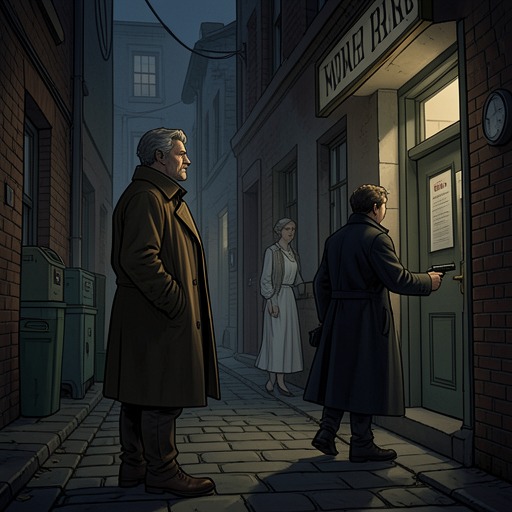
In Andy’s carefully cleared hotel room, Travis is shown two light-blue Samsonite cases taken from a closet. Their special locks open onto rows of new firearms cushioned in gray packing foam. Andy presents the merchandise as clean and anonymous, distinguishing it from inferior weapons. Travis already knows what he wants: a .44 Magnum. He later adds a .38 Special and a Colt .25, and agrees to buy all three with a holster for seven hundred dollars.
The transaction gives Travis access to weapons but not to a lawful permit. Andy estimates that a permit would cost at least five thousand dollars, perhaps more, and take a long time to obtain; he suggests six thousand for one he could make secure. Travis says he does not have that much money. Andy points out that a taxi driver cannot carry guns in a cab even with a permit, but Travis’s interest is not simply in having a weapon available for work. He wants to cross into action—to press the trigger—and asks about a nearby firing range. The distinction between permission and capability is already clear: the obstacle he cares about is not licensing but readiness.
Training the body and the weapons
After the purchase, Travis describes days of preparation that consume nearly his whole life. He fills his apartment with plans, photographs, press clippings, and maps, treating the arrangement of information as part of a task that must be done correctly. He also tries to rebuild a body he regards as weakened by injuries and scars. His daily exercise rises to twenty, thirty, and then forty pull-ups; he practices yoga and attempts to withstand pain by holding his arm over a burner without flinching. In his own system, physical discipline and the capacity for violence belong together: every muscle must be ready to serve an organized purpose.
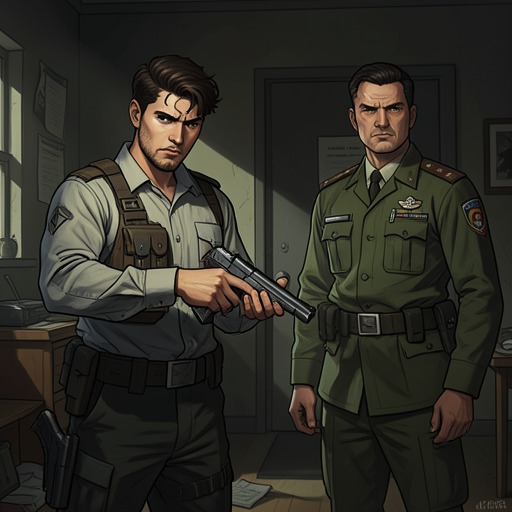
At the range Andy recommended, Travis learns to brace himself against the .44 Magnum’s recoil and keep his eyes on the target after each shot. The force makes his body tremble and nearly throws him backward, but he fights to maintain his stance. He becomes practiced with the .38 Special and the Colt .25 as well, learning to raise the smaller weapons and fire as his arm extends. He estimates that he has spent five thousand cartridges and can hit a human-shaped target at different distances. The range attendant, he observes, begins to tremble when he arrives. Travis reads that reaction as recognition that he is not there to play; practice has become a display of menace as well as a technical education.
The discipline does not bring ordinary stability. He describes his body as refusing sleep, food, and even basic bodily functions, while he swallows pill after pill and writes through the night. Some evenings he sits watching television with the Magnum on his knees. The guns have become, in his image, new arms: not merely objects he carries, but extensions required for the self he is trying to construct. The image makes the preparation both intimate and alarming. What promises him command also deepens his dependence on the weapons.
A public target and a private ambition
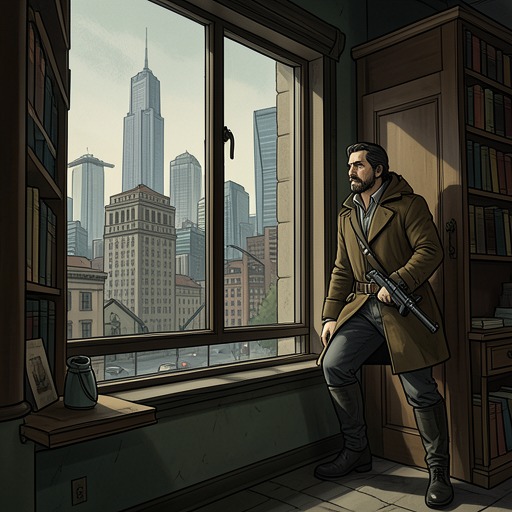
The preparations acquire a specific political target when Travis gathers information about Palantine’s movements. He studies the senator’s route from Kennedy Airport to The Plaza Hotel and around the city, consults newspaper accounts of the security detail, and begins to formulate what he calls a hunting plan. He memorizes the itinerary and practices drawing the .44 from its holster, firing imagined shots late at night. The intention is no longer abstract: a public figure’s schedule and protective arrangements have become material for planning an attack.
At a Harlem campaign appearance, the contrast between Palantine’s message and Travis’s purpose is visible in one scene. Palantine addresses racism, poverty, and war, urging an end to division and calling for unity and acceptance. The crowd applauds his speech. Travis remains in his taxi, occupied only partly by the address and inwardly composing a letter to his parents. His army jacket conceals a bulge from the .38 Special; sweat runs over his scars and into his mirrored glasses. The campaign’s language of solidarity fills the street, while Travis’s concealed weapon and private plan make him an unseen counterforce within the gathering.
His ambition extends beyond the immediate target. Travis imagines becoming somebody at last, a celebrity who enters history. He measures himself against notorious assassins and killers, worrying that they became unreal through their problems; he believes education, nerve, and growing skill as a marksman can keep him different. The desire to remain real is therefore bound to the desire to be remembered. Violence promises both a decisive act and a public identity, although the evidence does not show that the planned attack succeeds.
Concealment, contradiction, and the claimed purpose
Travis’s equipment creates a practical problem: the guns make visible bulges beneath his clothes. He devises a sliding mechanism along the inside of his forearm so the Colt .25 can remain hidden until a spring near his elbow sends it into his palm. He cuts a Western shirt to accommodate the mechanism and attaches a military combat knife to his calf, altering his jeans for access. To conceal the collection of weapons, he layers two Western shirts, a sweater, and a jacket. The disguise hides the bulges at the cost of making him look heavily bundled in increasingly warm weather. His effort to disappear is thus marked by the very bulk it is meant to conceal.
The self-image supporting the preparations is not consistent. Travis says he respects women, yet elsewhere casts himself as the man who must feel virile in order to act, and describes a sexual encounter through a version of events he says he cannot remember. His assertion of respect does not resolve the possessive and coercive ideas that shape his conduct. A related contradiction appears in his effort to persuade Iris to leave Sport: Travis announces that he will get her out, but she tells him that she lives where she is and later explains that, when sober, she has nowhere else to go. At breakfast she speaks about Pittsburgh and her parents, while Travis presses his own diagnosis of the danger she faces. His protective language reveals a moral purpose he believes in, but her objections show that his certainty does not amount to understanding her choices.
The same tension surrounds the Palantine plan. On the way toward the campaign scene, Travis thinks Betsy would be terrified and disappointed, then interprets his course as a virile feeling. He imagines Palantine as an idol to Betsy and frames his own action as an answer to that imagined devotion. Yet the preparations themselves show less a settled public principle than a private effort to force identity, control, and recognition into one violent act. By the time the weapons are trained, hidden, and linked to a memorized itinerary, Travis has made the plan the organizing center of his life; whether it will deliver the reality and significance he seeks remains unresolved.